Enrollment
Alabama Still Enrolls More Kindergartners Than Seniors, but the Margin Is Narrower
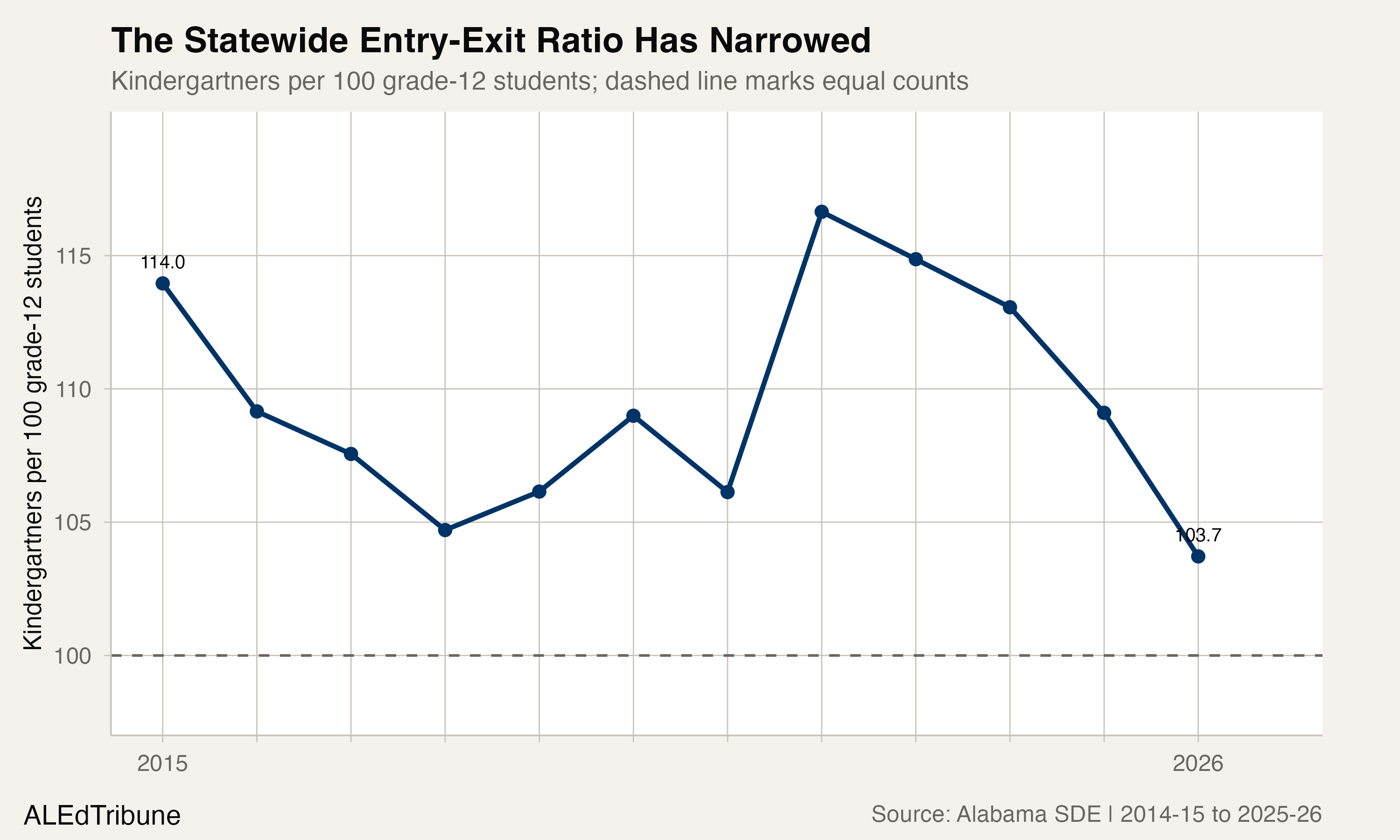
Alabama's 2025-26 kindergarten class remains larger than grade 12 statewide, while district entry-exit balances point in different directions.
Yellowhammer State Education Coverage, Driven by Data
Page 2 of 4
Alabama's 2025-26 kindergarten class remains larger than grade 12 statewide, while district entry-exit balances point in different directions.
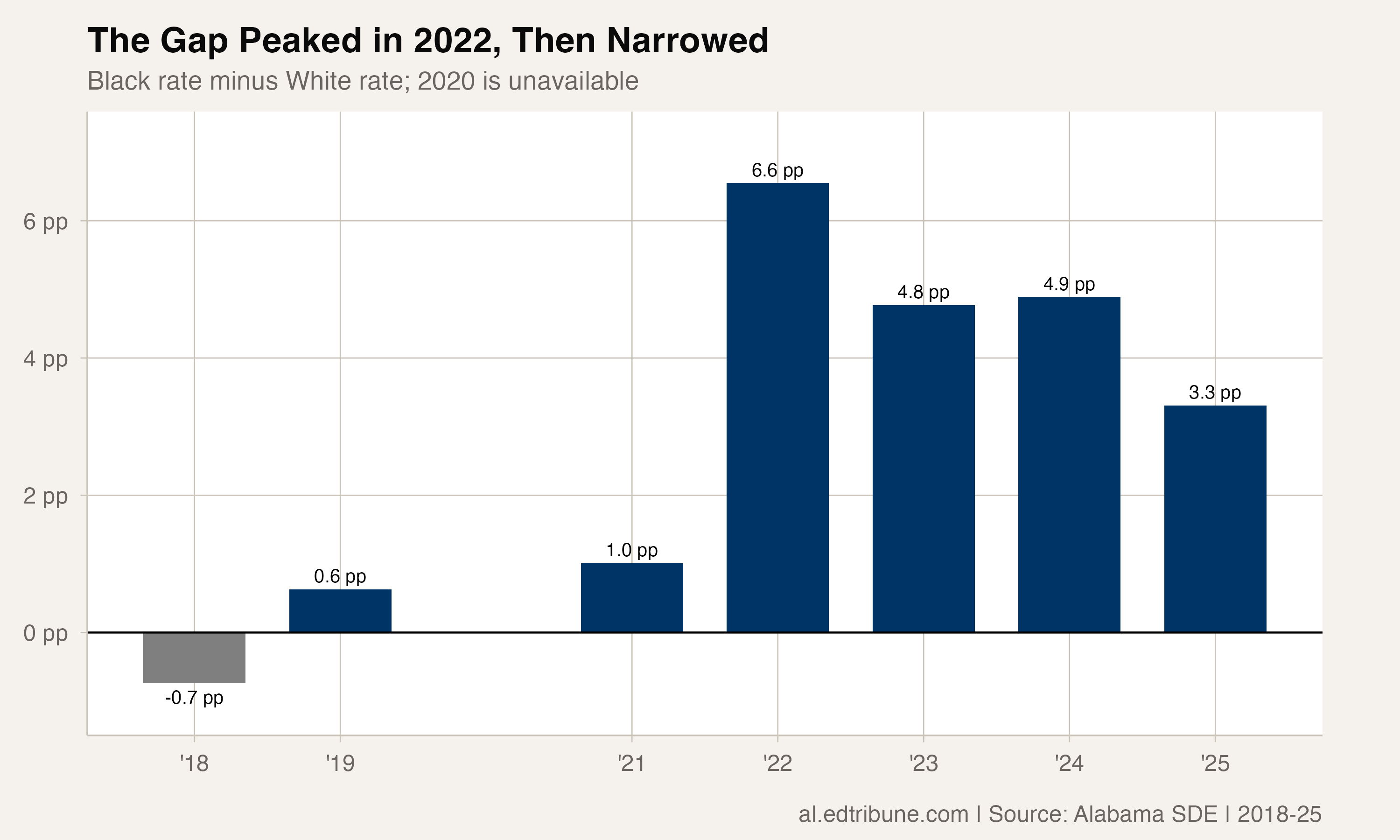
Alabama's Black-White chronic-absence gap grew from 0.63 point in 2019 to 3.31 points in 2025, after peaking at 6.55 points in 2022.
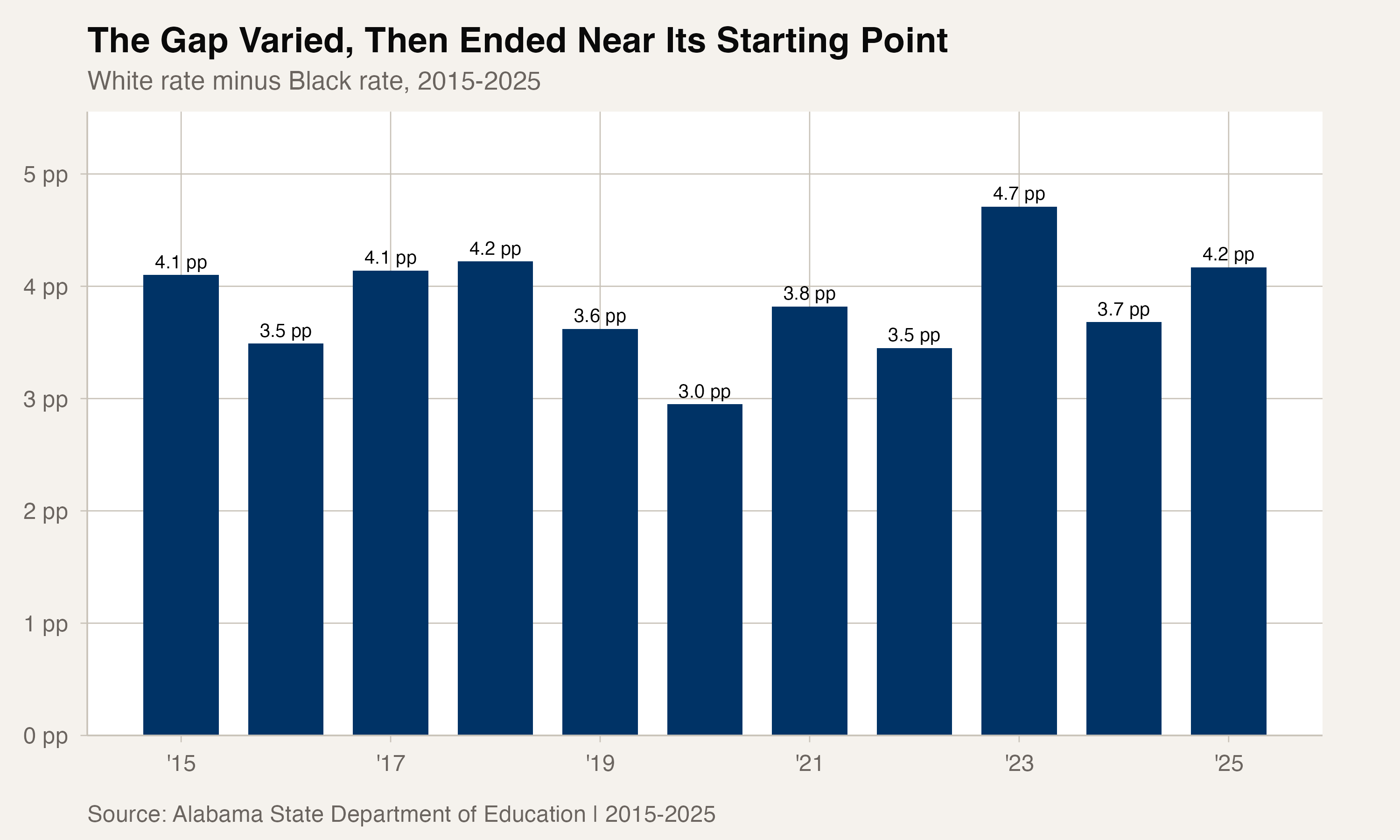
Alabama's White-Black graduation-rate gap was 4.1 points in 2015 and 4.2 points in 2025, although annual gaps ranged from 3.0 to 4.7 points.
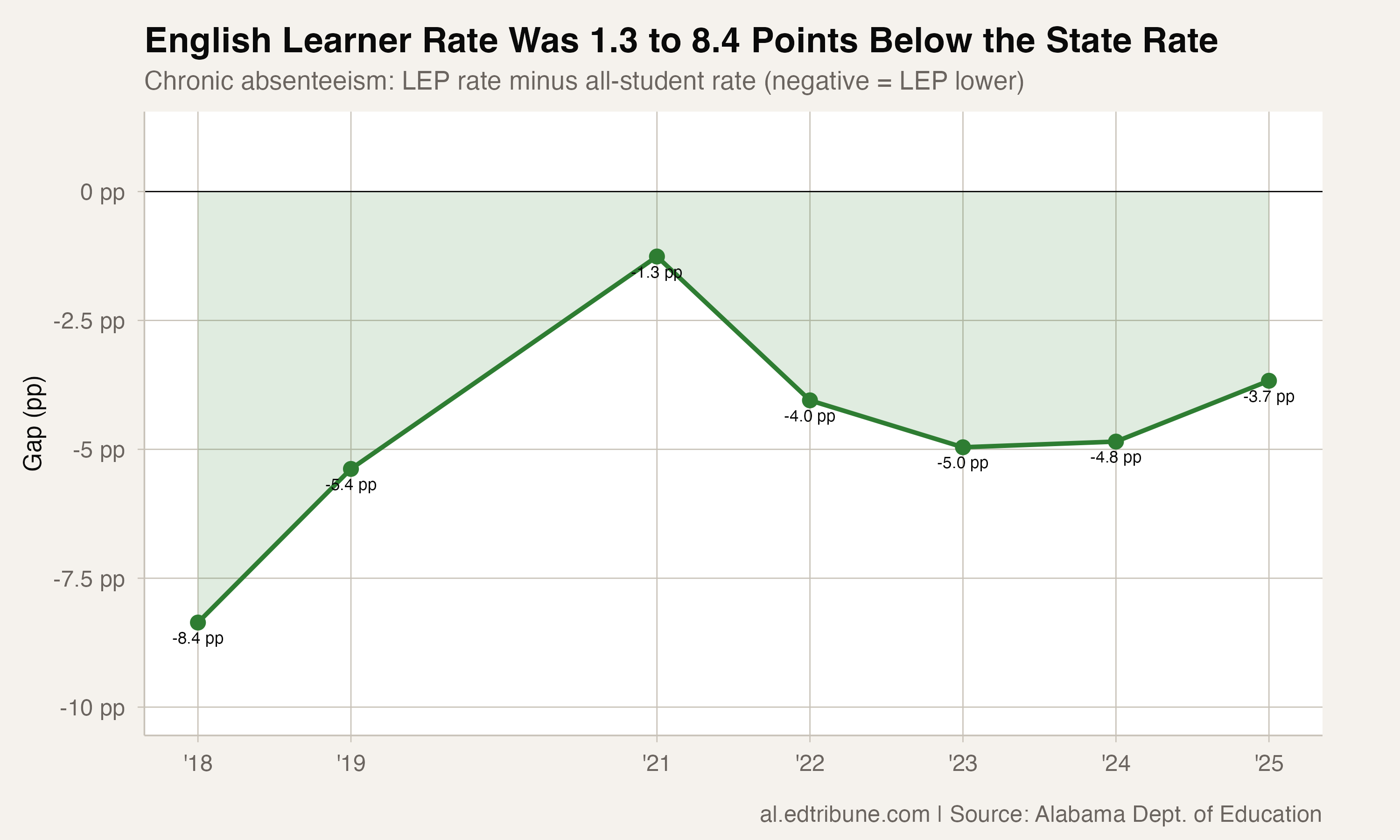
English learners had Alabama's second-lowest reported subgroup chronic absenteeism rate in 2025 at 8.38%, and their rate was below the statewide rate in all seven available years.
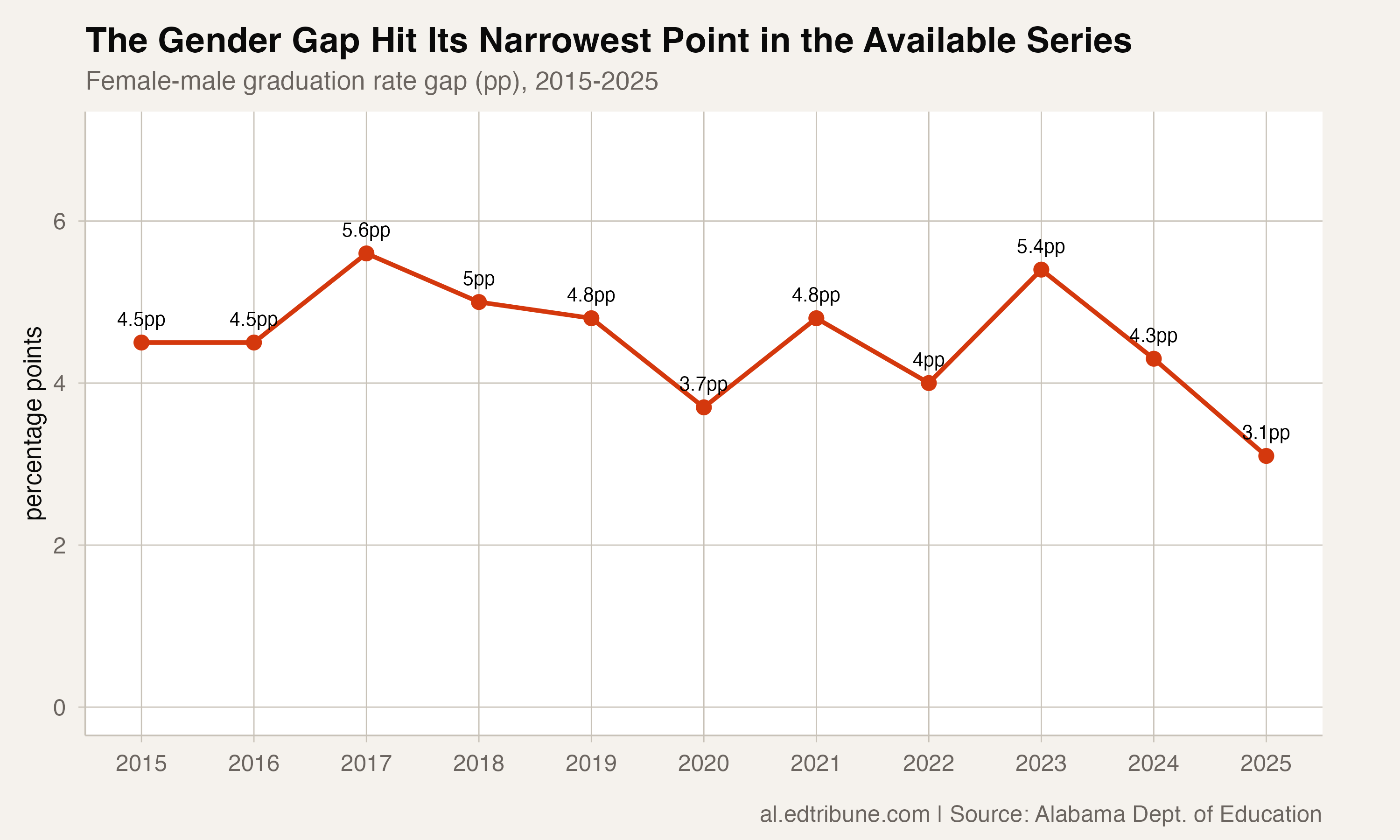
Alabama's male-female graduation gap narrowed to 3.1 points in 2025, the smallest in the available series, as the male rate reached 90%.
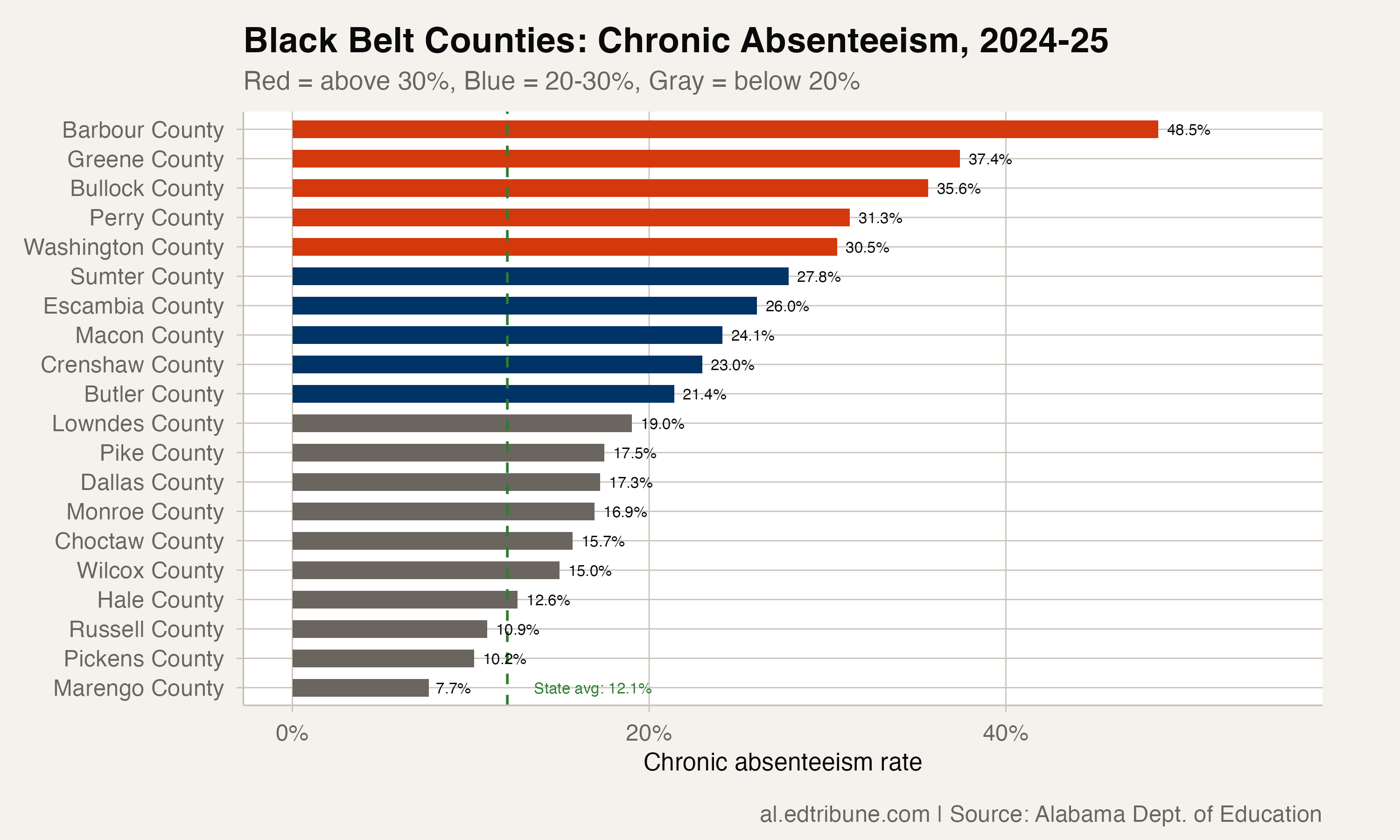
Across Alabama's 20 Black Belt counties, chronic absenteeism averages 22.4%, nearly double the state rate, with only three of 20 districts recovering to pre-COVID levels.
Dothan City Schools names Marketa George principal of Jerry Lee Faine Elementary, where she will lead a 285-student campus.

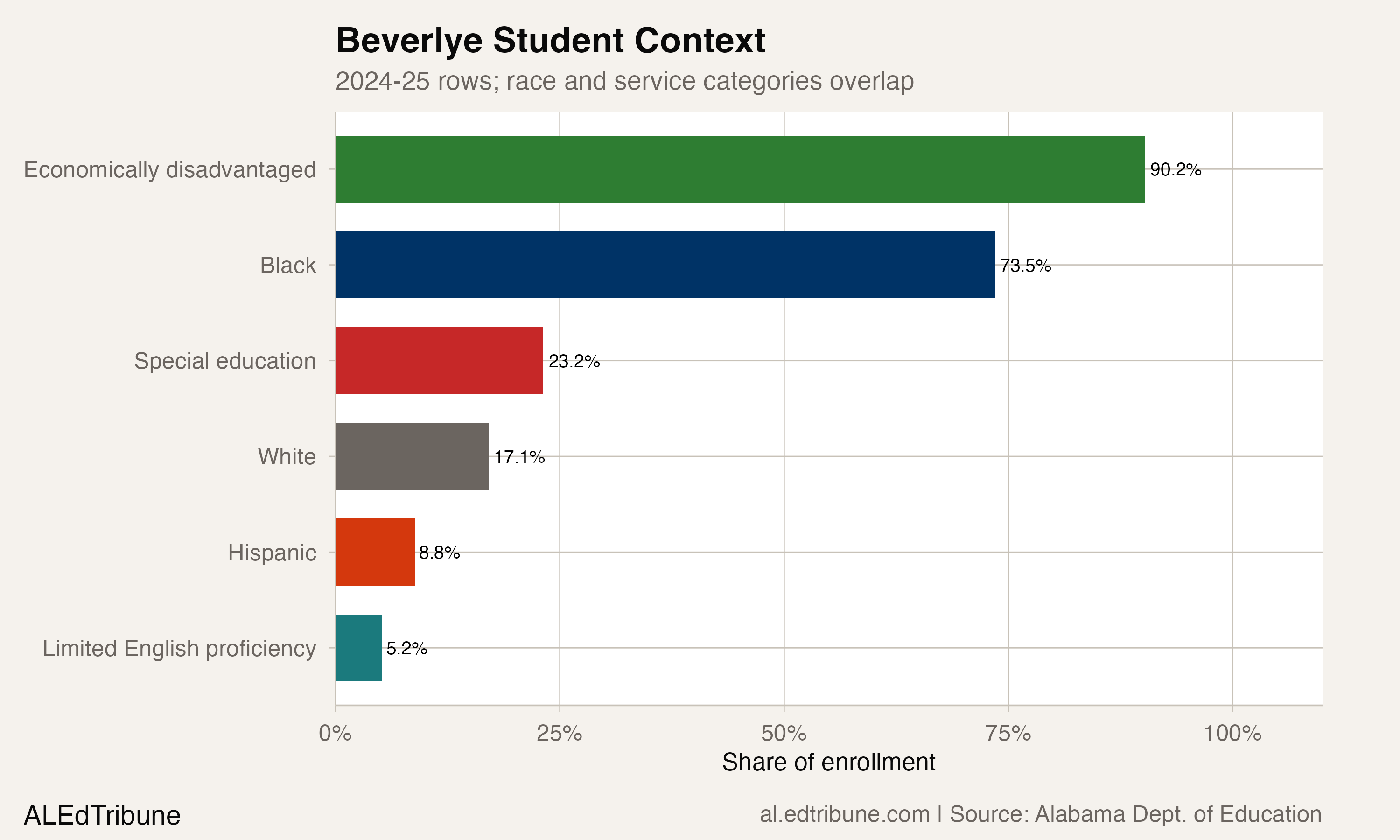
Dothan City Schools names Aundria L. Sewell principal of Beverlye Intermediate, where she will lead a 335-student campus.
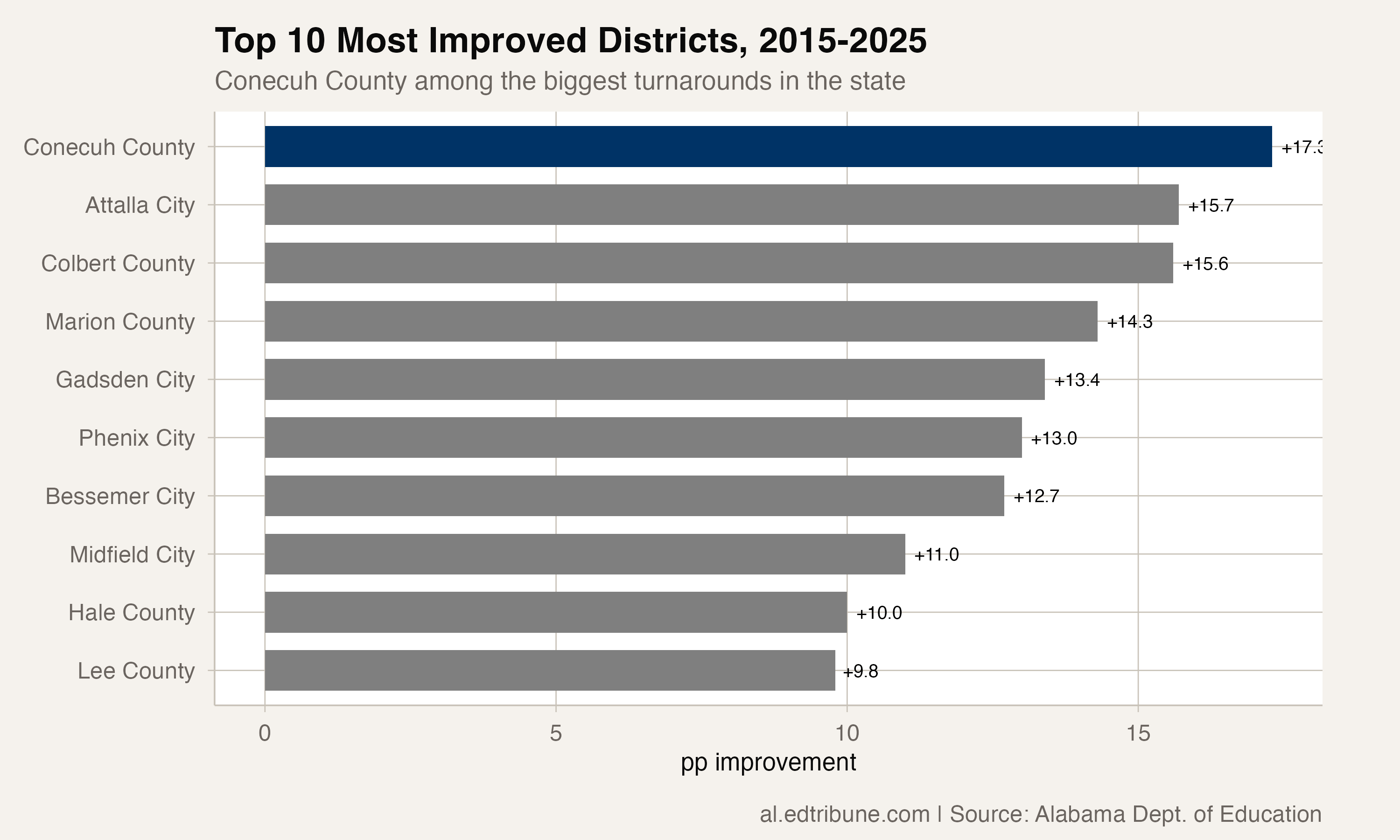
Conecuh County's graduation rate rose 17 points in a decade, from well below to above the state average. A rare rural turnaround story.
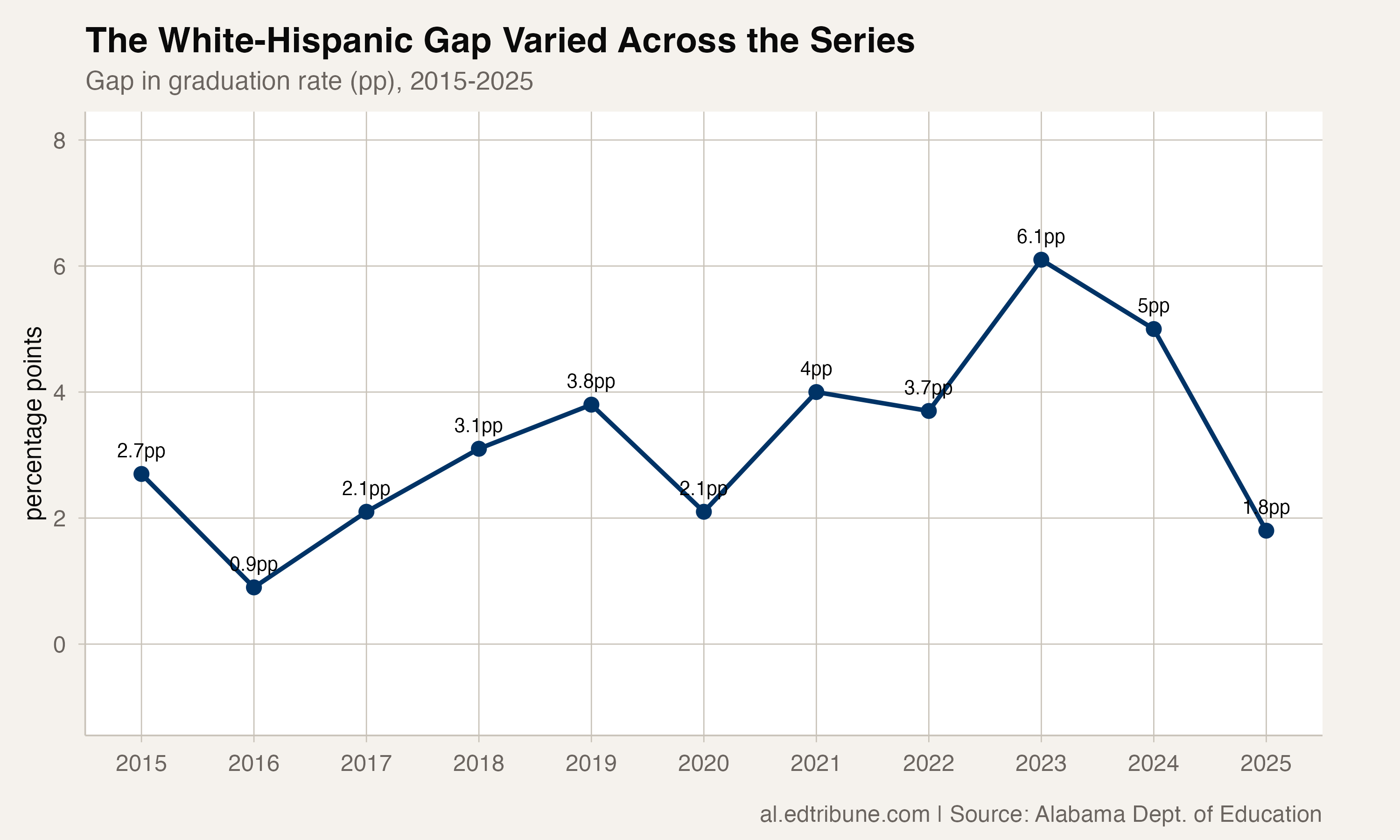
Alabama's white-Hispanic graduation gap moved from 0.9 points in 2016 to a series-high 6.1 points in 2023, then to 1.8 points in 2025.
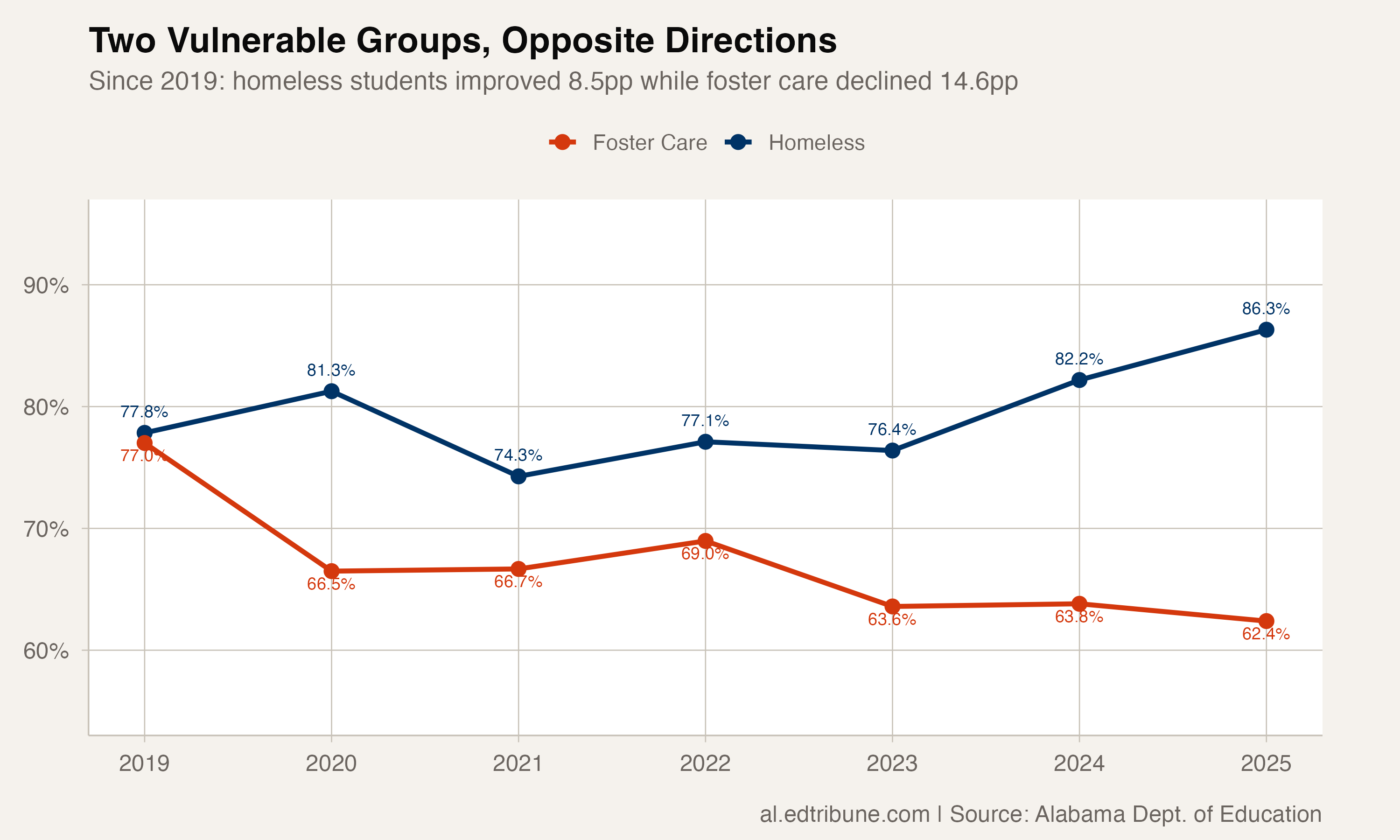
The graduation rate for students who are currently homeless in Alabama reached 86.3% in 2025, the highest mark in the state's 2015 through 2025 series.
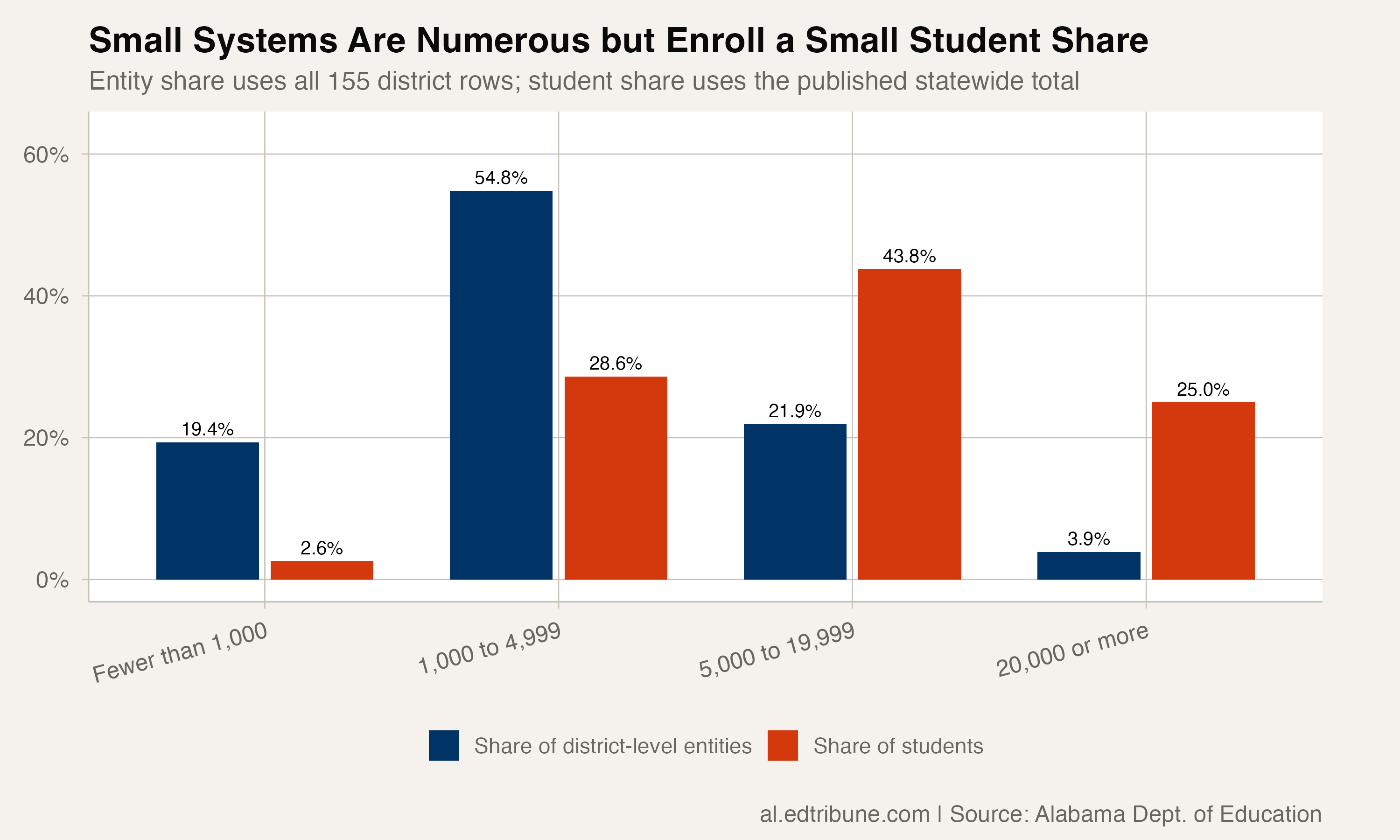
Thirty of Alabama's 155 district-level entities enroll fewer than 1,000 students, but together they serve 2.6% of students.
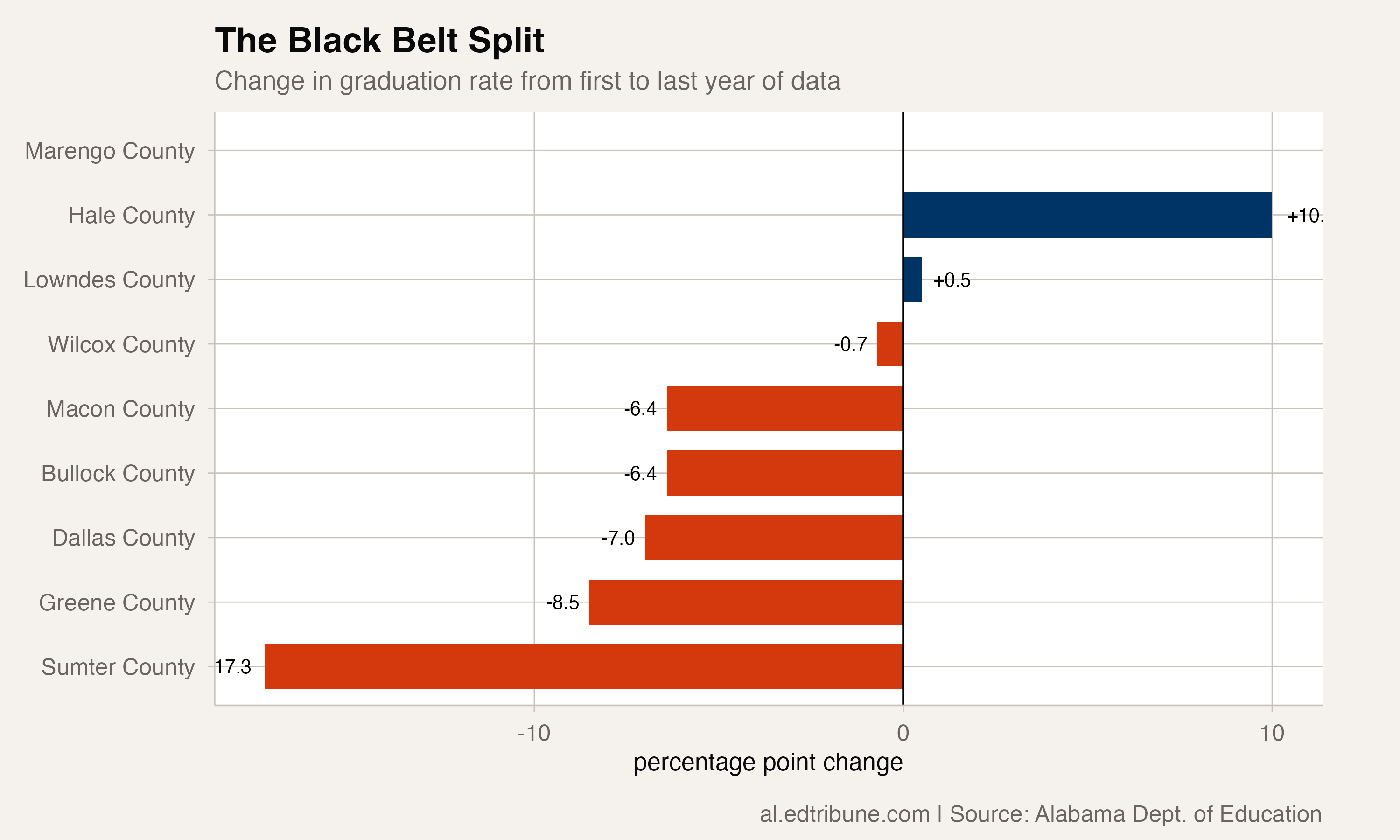
Alabama's Black Belt is splitting: Hale County's graduation rate rose 10 points while Sumter County's fell 17. A 27-point swing between neighbors.
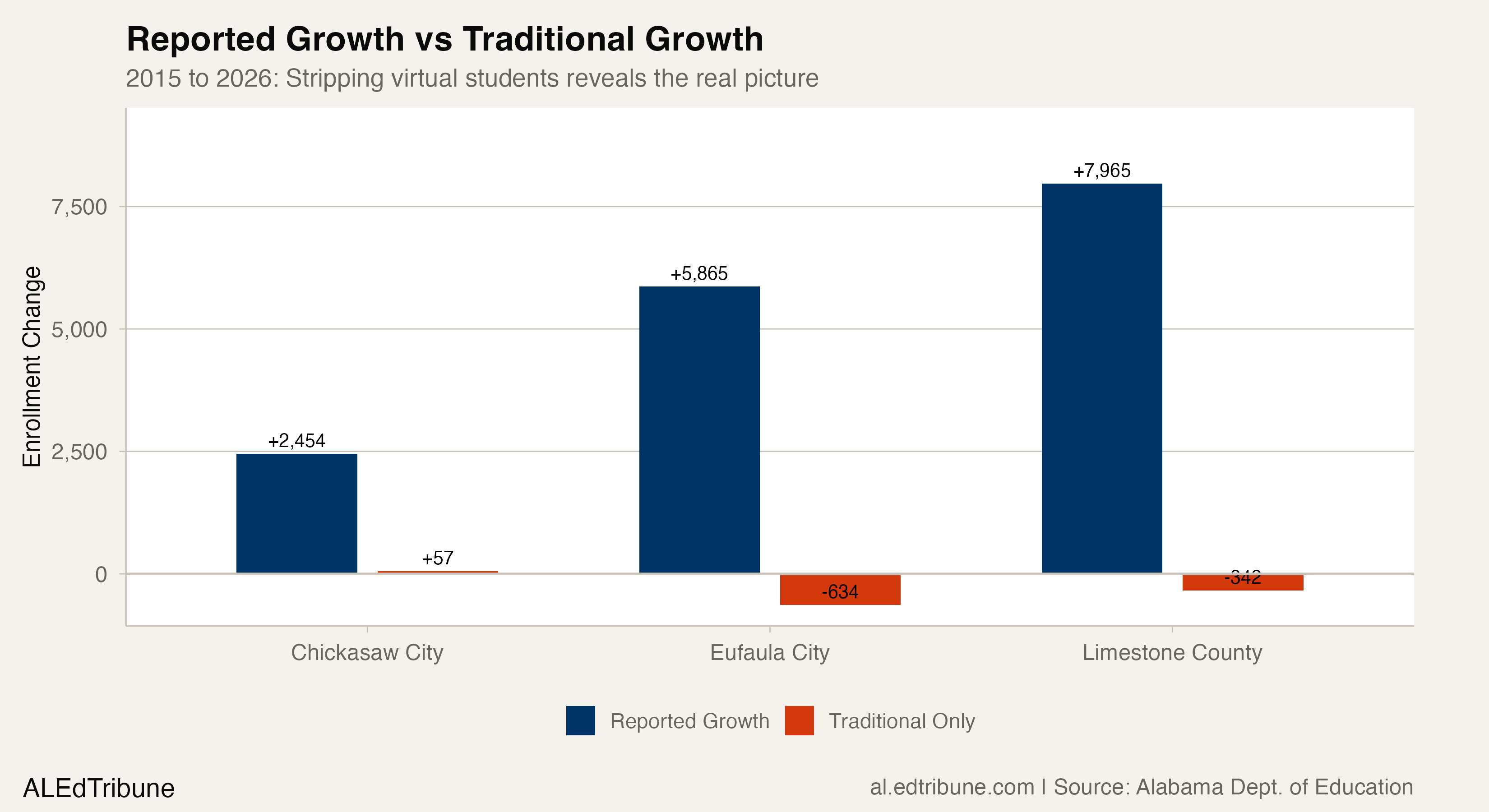
Alabama's three fastest-growing districts owe their growth to statewide virtual schools run by Pearson and Stride, not local enrollment gains.
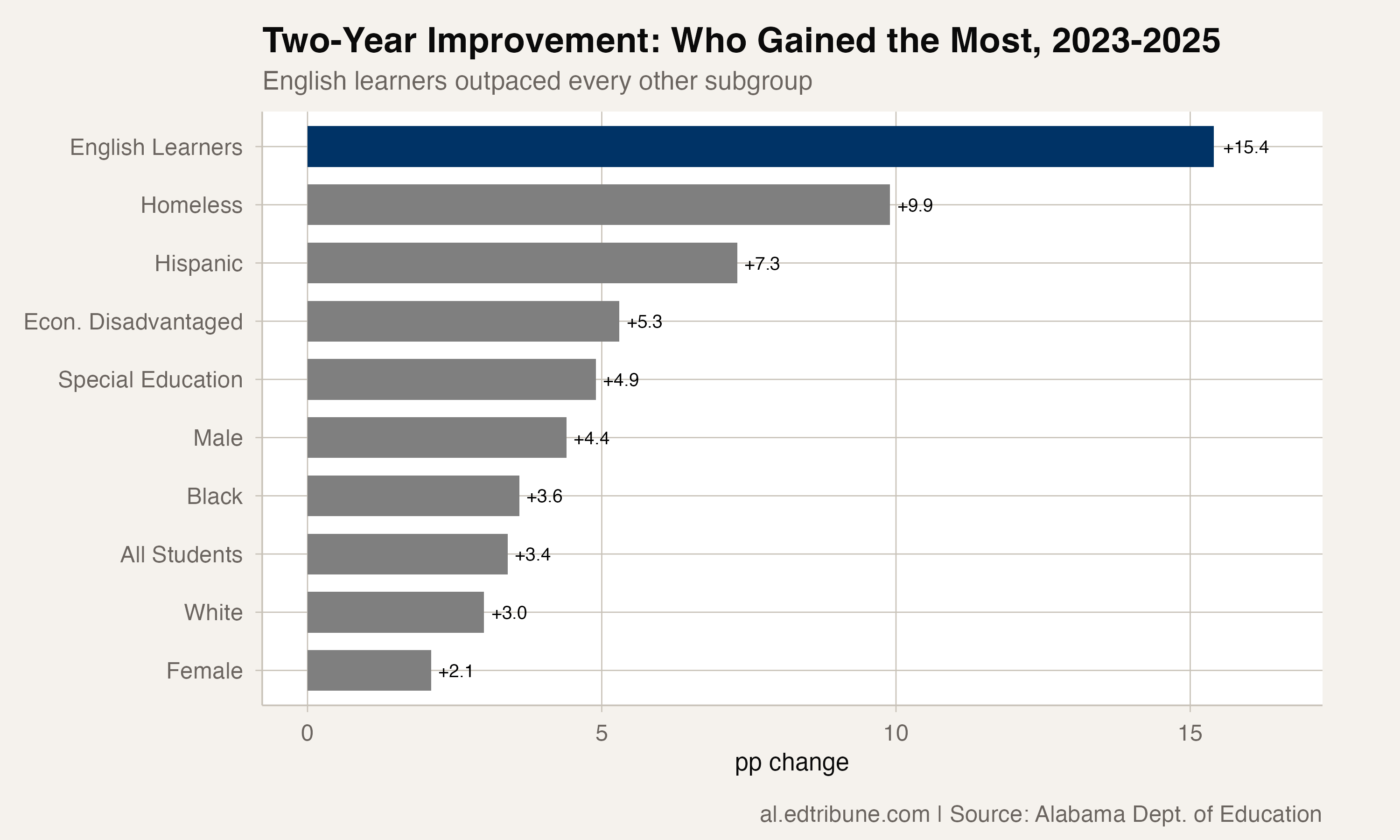
The graduation rate for Alabama students who are English learners rose from 67.9% to 83.3% in two years, the fastest gain of any subgroup and an all-time high.