
For Nick Looney, becoming principal of Athens Elementary School means continuing work in a building he already knows, with relationships he wants families to feel as soon as they enter.
“When they enter our building this fall, I want families to feel welcome, comfortable, and confident that this is a great place for their children to learn and grow.” Looney offered that perspective in written answers to The ALEdTribune, describing a neighborhood school where contact with families is part of everyday life.
His appointment appears in the Athens City↗ET Board of Education's spring personnel approvals, and the district's school directory lists him as principal. The move follows his work as the school's assistant principal, a role also documented in an earlier board school report.
Alabama's most recent published enrollment report records 454 students at Athens Elementary in 2025-26, last school year. That total includes 73 pre-K students. It describes the school before this principal transition and gives context for the early-grade work Looney discusses.
Continuing work in a familiar school
Looney said his move from secondary education into an elementary setting initially brought uncertainty about what to expect. Working at Athens Elementary changed that perspective. When the principal position opened, he wanted to continue serving the school and building on its existing work with staff.
His secondary-school background also appears in the Athens City Schools Foundation's Teacher of the Year archive, which names him as an Athens Middle School honoree. His path to the principalship thus includes both secondary teaching and elementary administration.
In his answers, Looney emphasizes staff participation in the systems and structures developed at Athens Elementary. The direction he describes is continuity: maintaining a shared approach to instruction while investing in the collaboration needed to carry it forward.
That approach brings together organization and relationships. Clear instructional expectations matter to him, but so do children feeling safe and families feeling connected. He describes the early years as shaping children's first experiences with school, making the atmosphere of the building part of the work of leading it.
Looney wants decisions about the school to come back to whether they help students learn and thrive. His emphasis on teacher collaboration connects that question to daily practice: adults working together around the knowledge, skills and confidence children will need as they move through the elementary grades.
An early-grade landscape
Last school year's published grade counts place 100 children in kindergarten, 95 in first grade, 90 in second grade and 96 in third grade. Those groups, together with the pre-K group, form the reported enrollment landscape.
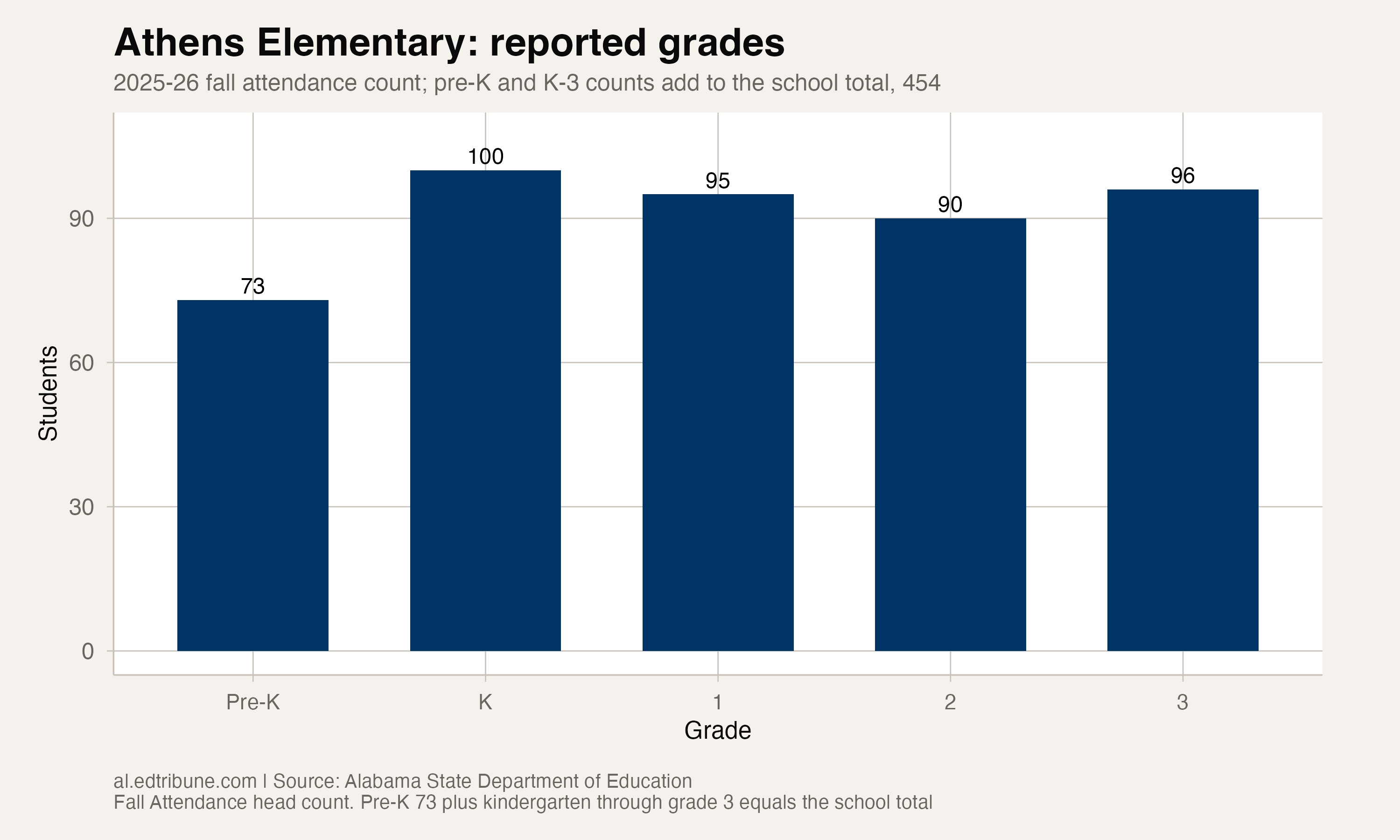
The kindergarten through third-grade counts sum to 381. Adding the 73 pre-K students gives the published school total of 454.
Looney's vision reaches across the grade span. He wants teachers to see students' learning as a continuous journey, with the work in a classroom preparing children for what comes next. His description includes pre-K and kindergarten as important parts of the school's learning environment, and the school's published total counts its pre-K children.
The school itself is listed as serving pre-K through third grade in the district's school directory. For Looney, the early-grade setting calls for an environment that is safe, joyful and structured, alongside deliberate attention to what children will know and be able to do when they leave.
A neighborhood connection
“We are a community school; our students and their families in some cases live literally across the street from the school.” Looney said being located among neighborhoods creates opportunities to interact regularly with families.
He also described language access as part of that relationship. In his account, the school has prioritized hiring staff who can help connect with Spanish-speaking families and support communication about children. He wants parents to know that the school sees them as partners.
“I want families to know that we see them, seek to partner with them, and we are excited to serve their children.”
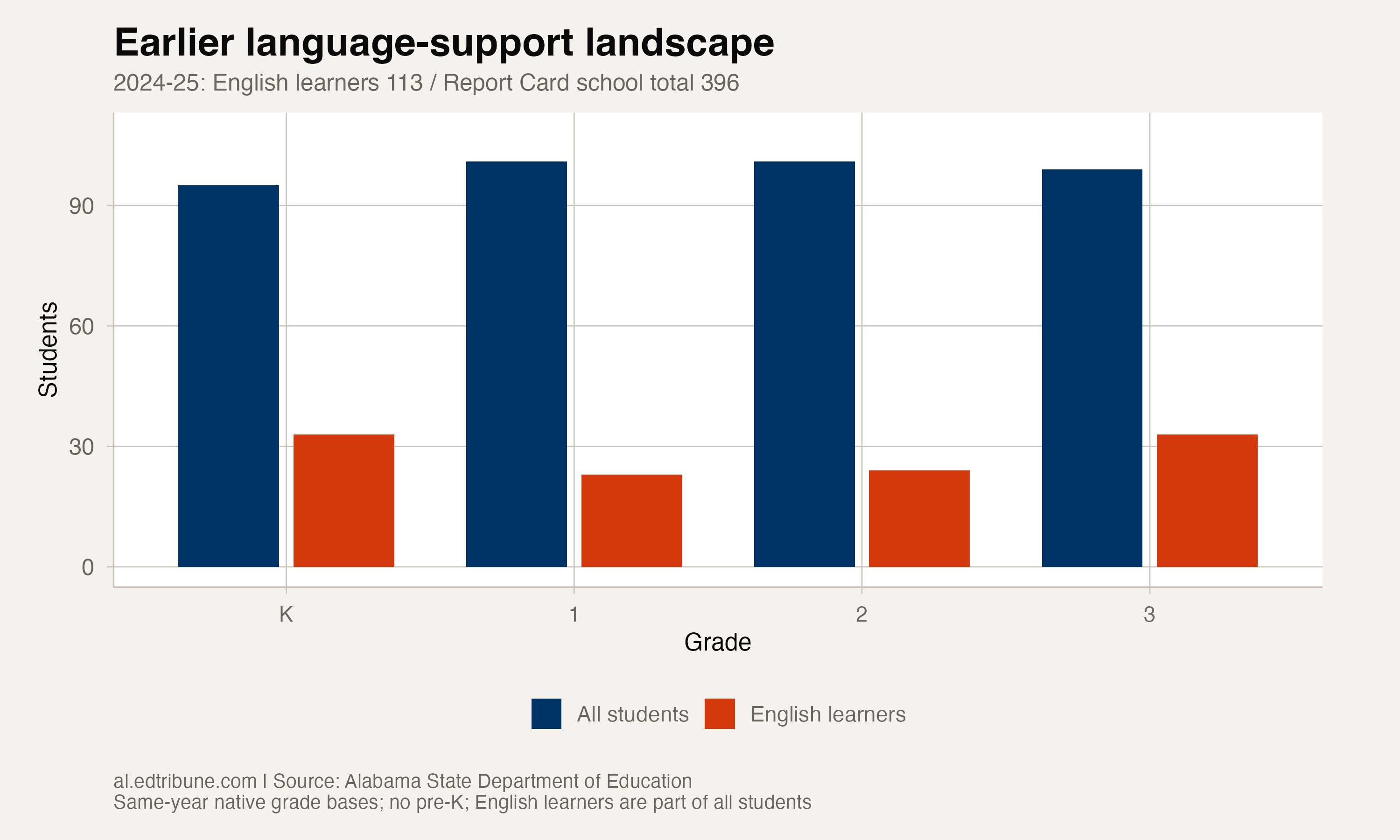
The state's earlier English learner report offers a separate instructional-support measure. In 2024-25, Athens Elementary reported 113 English learners against a published school total of 396, or 28.5%. Those figures cover the same grades and exclude pre-K. English learner classification does not measure the language spoken at home, and this earlier report cannot establish the school's composition last school year or now.
Part of Athens City
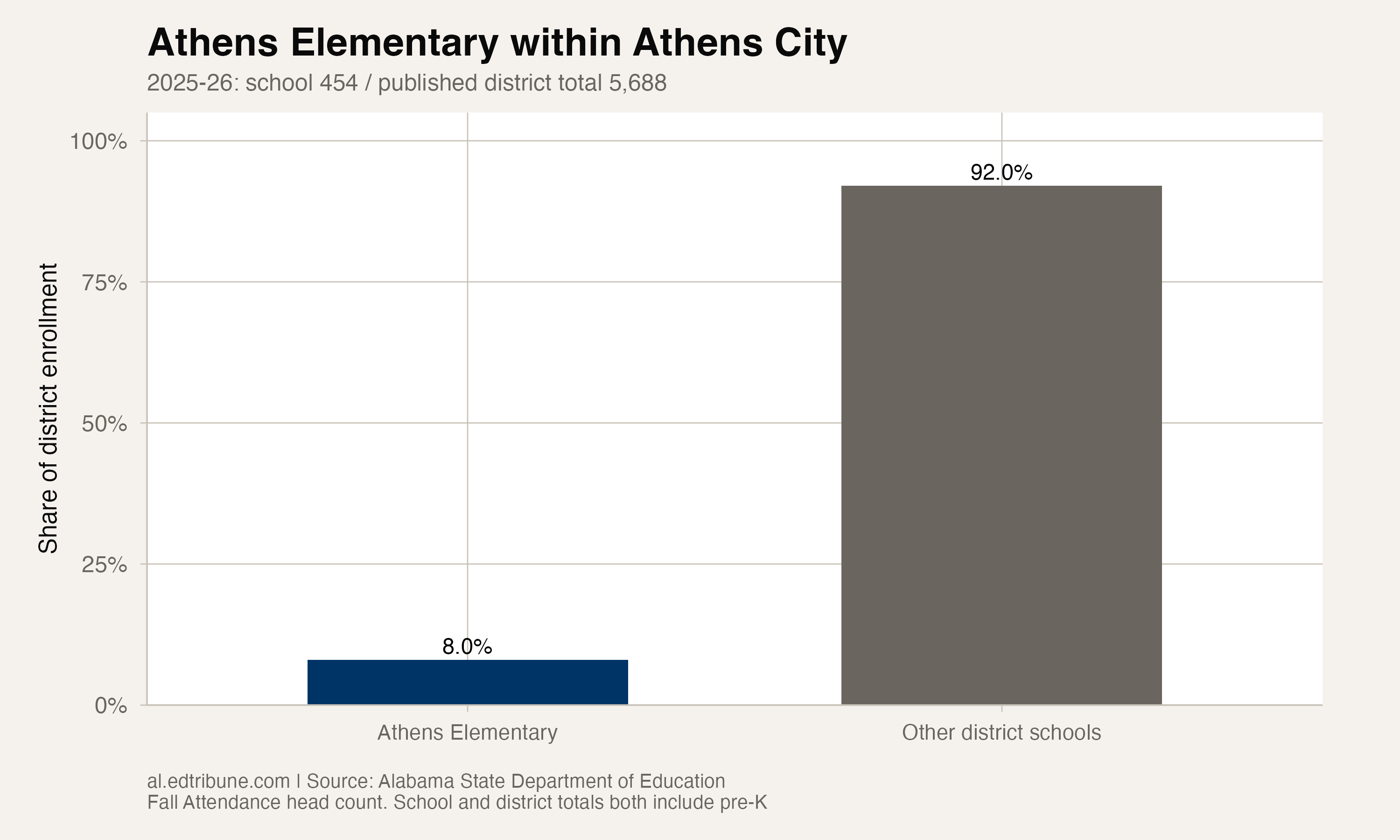
Athens Elementary represented 8.0% of Athens City's published district total of 5,688 students in 2025-26. School and district totals use the same reporting year and both include pre-K.
Earlier years come from a different state report, the Report Card counts, which also handle pre-K differently. Setting those figures beside last school year's fall attendance count would mix two measures, so this profile uses the 2025-26 snapshot on its own to describe the school's scale.
Looney's stated priority is to connect that early-grade work with a school where relationships remain central. He wants students to experience joy and structure, teachers to collaborate around clear expectations and families to feel comfortable engaging with the school. For the new principal, continuing familiar work also means keeping those relationships at the center of the decisions ahead.
Detailed code that reproduces the analysis and figures in this article is available exclusively to EdTribune subscribers.
Discussion
Sign in to join the discussion.
Loading comments...